
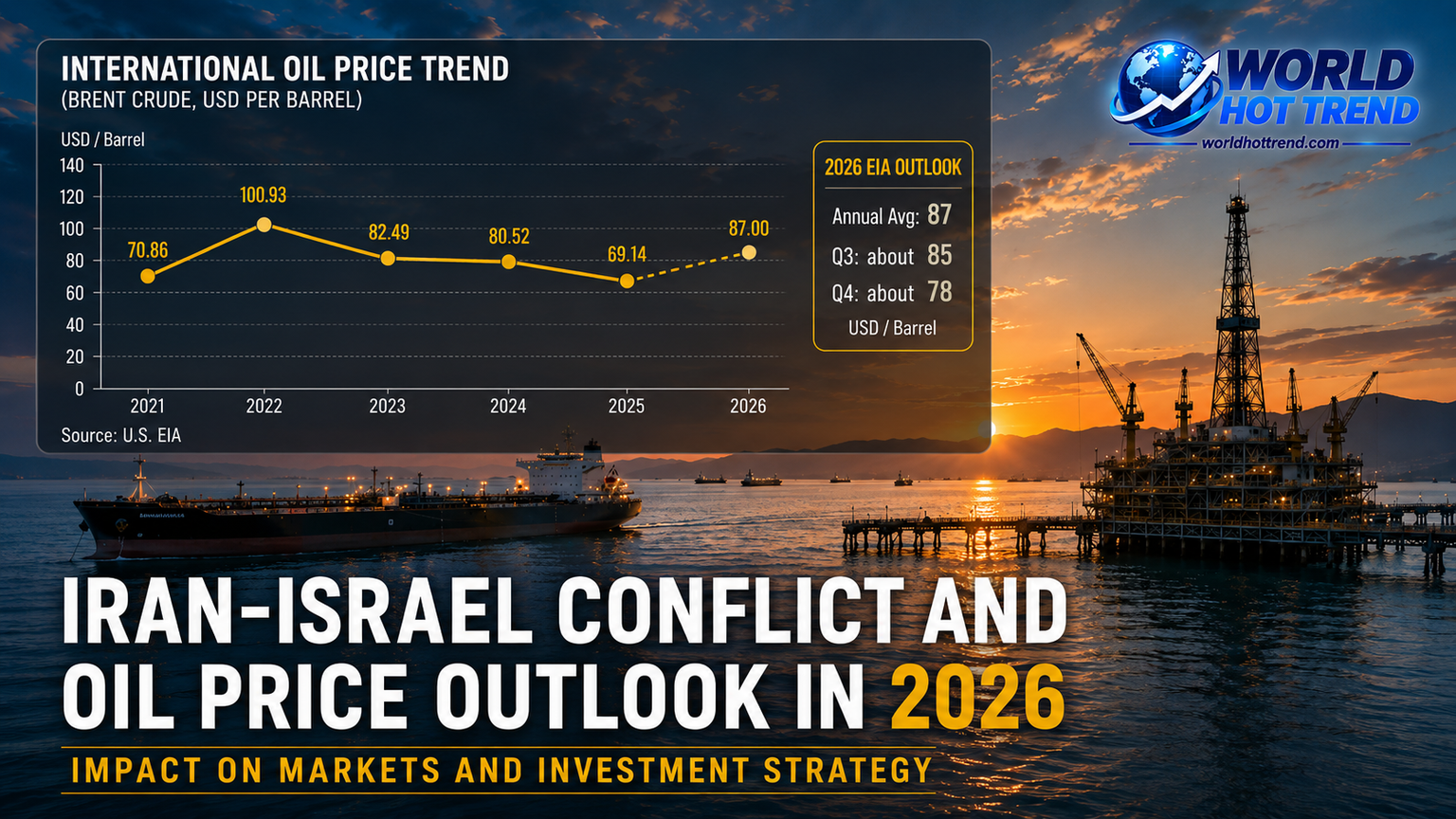
The war between the United States and Iran is no longer just a military confrontation.
Nearly six months into the 2026 conflict, the struggle has expanded into energy markets, global shipping, banking networks, oil sanctions, and international trade.
At the center of the crisis is one narrow waterway: the Strait of Hormuz.
But behind today’s military confrontation lies another conflict that has been developing for almost half a century — America’s economic pressure campaign against Iran.
In Part 1, we looked at how the relationship between the United States and Iran deteriorated from the 1953 coup and the 1979 Iranian Revolution to the nuclear dispute and the outbreak of war in 2026.
Part 2 focuses on a different question:
How did economic sanctions become one of America’s most powerful weapons against Iran, and why does the Strait of Hormuz now matter to the entire world economy?
From Military War to Economic War
Military power is only one part of the U.S. strategy toward Iran.
For decades, Washington has also used access to the dollar, international banking, oil markets, shipping, insurance, and foreign investment to pressure Tehran.
The sanctions did not appear all at once.
They developed step by step over nearly five decades.
Understanding these eight stages helps explain why Iran often describes U.S. sanctions not simply as diplomatic pressure, but as a form of economic warfare.
Eight Stages of U.S. Economic Sanctions Against Iran
1. 1979 — The United States Freezes Iranian Assets
The modern U.S. sanctions campaign against Iran began after the Iranian Revolution and the seizure of the U.S. Embassy in Tehran.
In November 1979, President Jimmy Carter issued Executive Order 12170, freezing Iranian government property under U.S. jurisdiction.
This marked the beginning of the modern sanctions framework between the two countries.
What initially began as a response to the hostage crisis eventually developed into a much broader system of financial and trade restrictions.
2. 1995 — U.S.–Iran Trade Is Largely Cut Off
A major expansion came under President Bill Clinton.
In 1995, the United States prohibited American investment in Iran’s petroleum sector and then imposed broader restrictions on U.S. trade and investment with Iran.
For American companies, normal commercial activity with Iran became extremely difficult.
This was an important turning point.
The sanctions were no longer focused only on specific Iranian government assets.
They were increasingly aimed at isolating Iran’s wider economy.
3. 2010 — Foreign Banks and Companies Come Under Pressure
The sanctions became much more powerful in 2010.
The Comprehensive Iran Sanctions, Accountability, and Divestment Act, commonly known as CISADA, expanded U.S. pressure beyond American companies.
Foreign banks and companies that conducted certain significant transactions with Iran could also face consequences in the United States.
This created a powerful choice for international financial institutions:
Continue doing business with Iran, or preserve access to the much larger U.S. financial system.
For many global banks, the decision was obvious.
They reduced or ended their Iran-related business.
This is one reason U.S. sanctions became far more influential than a simple bilateral trade embargo.
4. 2012 — Iran’s Central Bank and Oil Exports Are Targeted
The next major escalation came in 2012.
Washington increasingly targeted Iran’s most important source of foreign currency: oil exports.
The United States froze property connected to the Iranian government and Central Bank under U.S. jurisdiction and increased pressure on foreign financial institutions involved in Iranian petroleum transactions.
This transformed the sanctions campaign.
The goal was no longer simply to prevent American companies from trading with Iran.
The United States was attempting to reduce Iran’s ability to sell oil internationally and receive payment for it.
Oil revenues were crucial to the Iranian government.
Reducing those revenues placed direct pressure on Iran’s budget, currency, and broader economy.
5. 2016 — The Nuclear Agreement Brings Partial Sanctions Relief
For a brief period, the direction changed.
After Iran and world powers reached the Joint Comprehensive Plan of Action, or JCPOA, nuclear-related sanctions relief began on Implementation Day in January 2016.
The United States lifted or suspended a number of nuclear-related secondary sanctions affecting areas including banking, insurance, energy, petrochemicals, shipping, shipbuilding, and automobiles.
Hundreds of Iran-related individuals and entities were also removed from nuclear-related sanctions lists.
However, this did not mean that all U.S. sanctions disappeared.
Many restrictions on direct business between U.S. persons and Iran remained in place.
Still, 2016 represented the most significant easing of economic pressure in years.
6. 2018 — The U.S. Leaves the Nuclear Deal and Restores Maximum Pressure
The situation changed dramatically again in 2018.
President Donald Trump withdrew the United States from the JCPOA and began restoring sanctions that had been lifted or waived under the agreement.
Restrictions involving Iran’s currency, precious metals, automotive industry, energy sector, shipping, banking, insurance, and oil exports returned.
On November 5, 2018, the U.S. Treasury Iran sanctions.
More than 700 individuals, entities, aircraft, and vessels were designated or redesignated.
This became the centerpiece of the first Trump administration’s “maximum pressure” campaign.
The objective was to sharply reduce the revenue available to the Iranian government and force Tehran to make broader concessions over its nuclear program, missiles, and regional activities.
7. 2025 — Maximum Pressure Returns
When Donald Trump returned to the White House, the pressure campaign was revived.
In February 2025, the administration issued NSPM-2, formally restoring a policy of maximum pressure against the Iranian government.
The strategy called for aggressive enforcement of existing sanctions and additional efforts to deny Iran revenue.
Oil exports were once again a central target.
But by this point, Iran had developed increasingly complicated methods to move petroleum around the world.
Oil could pass through networks of intermediaries, shell companies, foreign brokers, tankers, and financial facilitators.
As a result, U.S. enforcement increasingly focused not only on Iran itself but also on companies and vessels in other countries that helped Iranian oil reach international buyers.
8. 2026 — Economic Fury Targets the Shadow Economy
By 2026, U.S. sanctions had entered an even more aggressive phase.
The Treasury Department began describing major enforcement actions under the name Economic Fury.
Instead of targeting only traditional banks or oil companies, authorities increasingly pursued the infrastructure Iran used to bypass sanctions.
That included foreign currency exchange networks, front companies, oil and LPG shipping networks, shadow-fleet vessels, procurement companies, digital asset exchanges, weapons networks, and offshore financial facilitators.
In May 2026, the U.S. Treasury targeted more than 50 companies, individuals, and vessels linked to Iranian revenue networks.
Nineteen vessels involved in petroleum and petrochemical shipments were blocked in that action.
Further sanctions followed against weapons procurement networks, shipping operations, exchange houses, and financial networks.
In July, Treasury targeted more than 50 individuals, entities, and vessels connected to a major Iranian sanctions-evasion shipping network.
And in August, U.S. authorities announced further action against international networks used to move large amounts of foreign currency for Iran.
The evolution is important.
The sanctions campaign that began with frozen government assets in 1979 had become, by 2026, a global effort to track ships, banks, exchange houses, shell companies, commodity traders, digital assets, and money moving across multiple jurisdictions.
The Eight Stages in One View
1979 — Iranian government assets frozen
1995 — U.S. trade and investment with Iran largely blocked
2010 — Foreign banks and companies face stronger U.S. pressure
2012 — Iran’s Central Bank and oil exports become major targets
2016 — Nuclear agreement brings partial sanctions relief
2018 — Nuclear-related sanctions are broadly restored under maximum pressure
2025 — Maximum Pressure policy returns
2026 — Economic Fury targets shadow banking, shipping, foreign currency, digital assets, and sanctions-evasion networks
Why U.S. Sanctions Became So Powerful
The power of U.S. sanctions comes from something larger than the American market itself.
The U.S. dollar remains central to international finance.
Major international banks also require access to the American financial system.
This means a foreign bank may have relatively little business with the United States directly, yet losing access to dollar clearing or U.S. financial institutions could still be extremely damaging.
That gives Washington enormous leverage.
A foreign company considering a transaction with Iran may therefore ask a simple question:
Is doing business with Iran worth risking access to the United States?
For many institutions, the answer has been no.
This is how American sanctions can affect trade between Iran and countries that are not formally participating in the U.S. sanctions policy.
Why Oil Matters More Than Almost Anything Else
Iran is one of the world’s major holders of oil and natural gas reserves.
Oil exports have historically provided Tehran with a critical source of foreign currency and government revenue.
That makes petroleum a natural target for economic pressure.
But sanctioning Iranian oil creates a dilemma.
If too much supply disappears from the market, international oil prices can rise.
Higher oil prices can then hurt consumers in the United States, Europe, and Asia.
The same policy designed to weaken Iran can therefore produce economic costs for countries imposing or supporting the sanctions.
This problem becomes even more serious when the Strait of Hormuz is disrupted.
Why the Strait of Hormuz Is So Important
The Strait of Hormuz is a narrow waterway connecting the Persian Gulf with the Gulf of Oman and the Arabian Sea.
It is one of the most strategically important energy corridors in the world.
Oil and liquefied natural gas from major Gulf producers depend heavily on routes through or near the strait.
Saudi Arabia, Iraq, Kuwait, the United Arab Emirates, Qatar, and Iran are all connected to the regional energy system affected by this maritime chokepoint.
Before the current conflict, roughly one-fifth of global petroleum liquids consumption moved through the Strait of Hormuz.
That means a serious disruption is not simply an Iranian problem.
It can become a global supply problem.
The Strait Becomes Part of the War
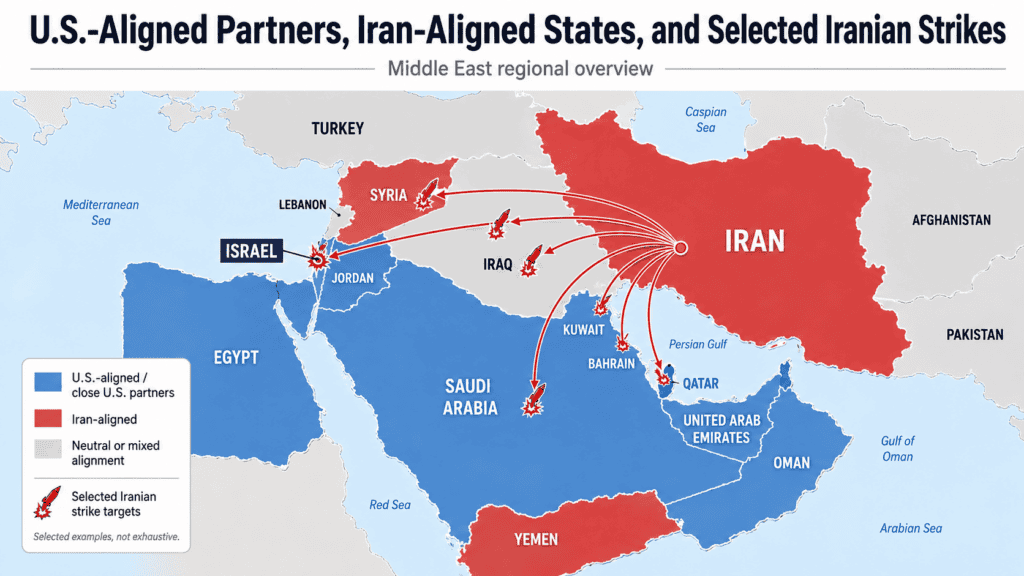
The 2026 conflict transformed the Strait of Hormuz from a geopolitical risk into an active economic battlefield.
Shipping traffic has fallen dramatically from normal levels.
According to Reuters reporting in August 2026, oil flows through the strait had fallen from roughly 18 million barrels per day before the war to around 2 million barrels per day during the prolonged crisis.
Ship-tracking data has also shown extremely low numbers of commodity vessels passing through the waterway on some days.
The result is a highly unusual situation.
The United States is attempting to restrict Iran’s access to oil revenue and international finance.
Iran, meanwhile, possesses the geographic ability to threaten one of the world’s most important energy transportation routes.
Economic sanctions and military geography have become directly connected.
Why Iran Uses Hormuz as Leverage
In conventional military terms, the United States possesses far greater resources than Iran.
Iran cannot easily match American air power, naval power, financial power, or technological capabilities.
But geography gives Tehran another form of leverage.
Iran controls a long coastline along the northern side of the Strait of Hormuz.
By threatening commercial shipping or making passage more dangerous, Iran can increase insurance costs, freight rates, energy prices, and uncertainty throughout the global economy.
That allows Tehran to effectively send a message to Washington:
If Iran cannot freely sell its energy, the rest of the world may also find energy trade more difficult.
This is one of the central strategic dynamics of the conflict.
Sanctions and War Are Now Reinforcing Each Other
Economic sanctions and military confrontation were once relatively separate tools.
In 2026, they have become increasingly connected.
When shipping attacks intensify, Washington announces or enforces additional sanctions.
When sanctions become more severe, Tehran threatens stronger action around the Strait of Hormuz.
Those threats raise oil prices and shipping costs.
Higher economic pressure then increases incentives for sanctions evasion through shadow fleets, alternative payment systems, shell companies, foreign exchange networks, or digital assets.
Washington responds by targeting those networks as well.
The result is a cycle:
Military escalation → stronger sanctions → Iranian retaliation → disrupted shipping → higher energy prices → more economic pressure → additional sanctions.
Breaking this cycle has become increasingly difficult.
The Global Oil Market Is Already Feeling the Impact
Energy markets reflect the seriousness of the crisis.
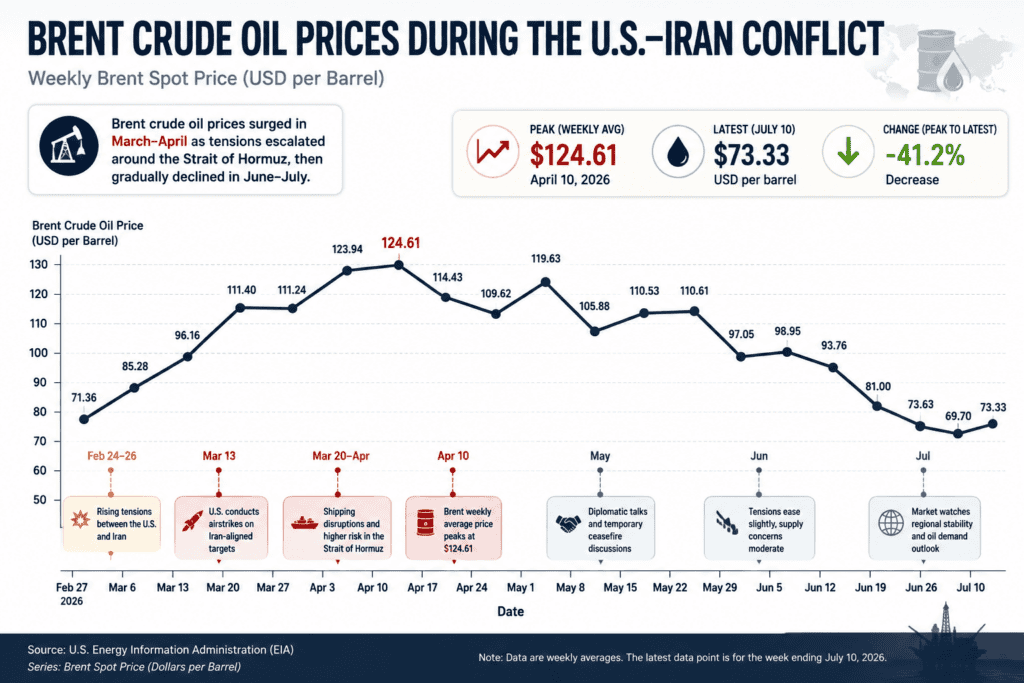
By August 21, 2026, Brent crude had settled at approximately $94.39 per barrel, while U.S. West Texas Intermediate settled near $87.06.
These prices do not depend only on Iranian production.
Markets are also pricing the possibility that prolonged disruption in the Strait of Hormuz could affect energy exports from other Gulf producers.
This distinction is crucial.
The biggest global economic risk is not simply that Iran might export less oil.
It is that a major transportation corridor used by several of the world’s most important energy exporters could remain unstable for an extended period.
How the Conflict Can Reach Ordinary Consumers
A war thousands of miles away can eventually appear in household expenses around the world.
The transmission can happen in several stages.
Higher Energy Prices
Higher crude oil and natural gas prices can raise gasoline, diesel, electricity, heating, and aviation costs.
Higher Shipping and Insurance Costs
When vessels operate in a conflict zone, insurers demand higher premiums.
Shipping companies may also reroute vessels, delay departures, or charge more for transportation.
Higher Production Costs
Energy is used throughout modern manufacturing and agriculture.
When fuel, electricity, and transportation become more expensive, the cost of producing goods can rise.
Higher Consumer Prices
Businesses eventually pass at least part of those increased costs to consumers.
Food, manufactured products, airline tickets, deliveries, and many other goods and services can become more expensive.
Pressure on Interest Rates
If energy-driven inflation remains high, central banks may find it harder to reduce interest rates.
This means a conflict in the Middle East can eventually affect mortgages, business borrowing, investment, and global economic growth.
China Is a Critical Part of the Sanctions Equation
China is especially important because it has been a major buyer of Iranian oil.
This creates a difficult problem for Washington.
To severely restrict Iran’s petroleum revenue, U.S. authorities must not only target Iranian sellers.
They also have to pressure foreign buyers, refiners, shipping companies, brokers, and financial intermediaries.
But aggressive enforcement involving major Chinese companies risks creating additional tension between the world’s two largest economies.
The U.S.–Iran confrontation can therefore intersect with the much larger U.S.–China economic relationship.
This is another reason the sanctions issue extends far beyond the Middle East.
Can Sanctions Force Iran to End the War?
This is the central strategic question.
Sanctions can significantly damage an economy.
They can restrict foreign currency, complicate imports, reduce investment, weaken a currency, increase inflation, and make government financing more difficult.
But economic pain does not automatically produce political surrender.
Iran has lived with varying levels of U.S. sanctions for decades.
During that period, Tehran has developed networks designed to evade restrictions and maintain at least part of its international trade.
At the same time, the accumulated pressure is substantial.
The combination of war damage, reduced oil revenues, financial isolation, currency weakness, inflation, and additional sanctions can create serious domestic political pressure.
The question is whether that pressure makes Iranian leaders more willing to negotiate — or more willing to escalate.
The United States Also Faces Costs
Economic warfare does not operate in only one direction.
If sanctions contribute to reduced Middle Eastern oil supplies and higher energy prices, American consumers can also pay more for fuel.
Global shipping disruptions can raise costs for U.S. businesses.
Persistent energy inflation can complicate Federal Reserve policy.
And an extended military deployment adds significant government costs.
This means Washington faces its own calculation.
How much economic pressure can it apply to Iran without producing unacceptable costs for the United States and its allies?
Gulf States Face an Even More Difficult Position
The Gulf states are among the countries most exposed to a prolonged crisis.
Saudi Arabia, the United Arab Emirates, Qatar, Kuwait, Bahrain, and Oman all depend to varying degrees on stable regional trade, energy infrastructure, shipping, or security.
Many maintain close security relationships with the United States.
But a wider war could also expose their cities, ports, oil facilities, LNG infrastructure, and transportation networks to attack.
For them, the ideal outcome is often neither an Iranian military victory nor an unlimited U.S. military campaign.
It is regional stability.
That is why Gulf diplomacy can become extremely important in any future negotiations.
Is the United States Winning?
There is no simple answer.
The United States has overwhelming conventional military and financial advantages.
It can destroy military infrastructure, restrict access to financial markets, sanction international networks, and pressure foreign companies.
But destroying military assets is not the same as achieving a political objective.
If Iran does not accept Washington’s nuclear and security demands, if the Strait of Hormuz remains unstable, and if the Iranian government remains in power and capable of retaliation, declaring a clear strategic victory becomes much more difficult.
Long wars also create political, military, and economic costs for the stronger side.
The conflict is therefore becoming a test not only of military strength, but of endurance.
Iran Faces the Same Problem
Iran also has powerful reasons to seek an end to the conflict.
Its economy was already under pressure before the war.
Military damage, reduced oil exports, restrictions on international payments, currency weakness, and additional sanctions add to those difficulties.
The longer the conflict continues, the more difficult it becomes to maintain economic stability.
But Iranian leaders face a political dilemma.
Making major concessions under American pressure could be presented domestically as surrender.
Washington faces a similar problem.
Accepting an agreement without substantial Iranian concessions could be portrayed as failing to achieve the objectives of the pressure campaign.
That makes diplomacy difficult even when both sides have reasons to stop fighting.
Three Things to Watch Next
Instead of following every missile strike or political statement, three indicators may provide a clearer picture of where the conflict is heading.
1. Shipping Through the Strait of Hormuz
A sustained increase in commercial traffic would be one of the clearest signs that tensions are easing.
If vessel traffic remains extremely low, the economic crisis is likely to continue.
2. U.S.–Iran Negotiations
Direct negotiations matter, but so do indirect talks conducted through regional governments.
Most prolonged conflicts eventually require some kind of political settlement.
3. Oil Prices
Oil prices function as a global measure of perceived supply risk.
If markets believe the Strait of Hormuz will remain disrupted, that risk will continue to appear in crude prices, freight rates, and energy costs.
Conclusion: The Real Battlefield May Be the Global Economy
The United States and Iran are fighting in the Middle East.
But the consequences reach much further.
A sanctions campaign that began with frozen Iranian assets in 1979 has developed into one of the most extensive financial pressure systems in the world.
At the same time, Iran sits beside one of the world’s most important energy chokepoints.
That creates an unusual confrontation.
The United States possesses enormous financial power.
Iran possesses strategic geography.
Washington can attempt to restrict Iran’s access to dollars, oil revenue, banks, ships, and international companies.
Iran can increase the risk of moving energy through the Persian Gulf.
The longer this confrontation continues, the more difficult it becomes to separate military warfare from economic warfare.
Oil prices, shipping costs, inflation, international finance, and global trade are now part of the battlefield.
The most important question may therefore no longer be simply:
Which side has the stronger military?
It may be:
How long can Iran, the United States, and the global economy continue to absorb the cost of this conflict?
This article reflects publicly available information as of August 23, 2026. Military, diplomatic, sanctions, and energy-market conditions may change rapidly.
Continue reading → U.S.–Iran War Part 3