
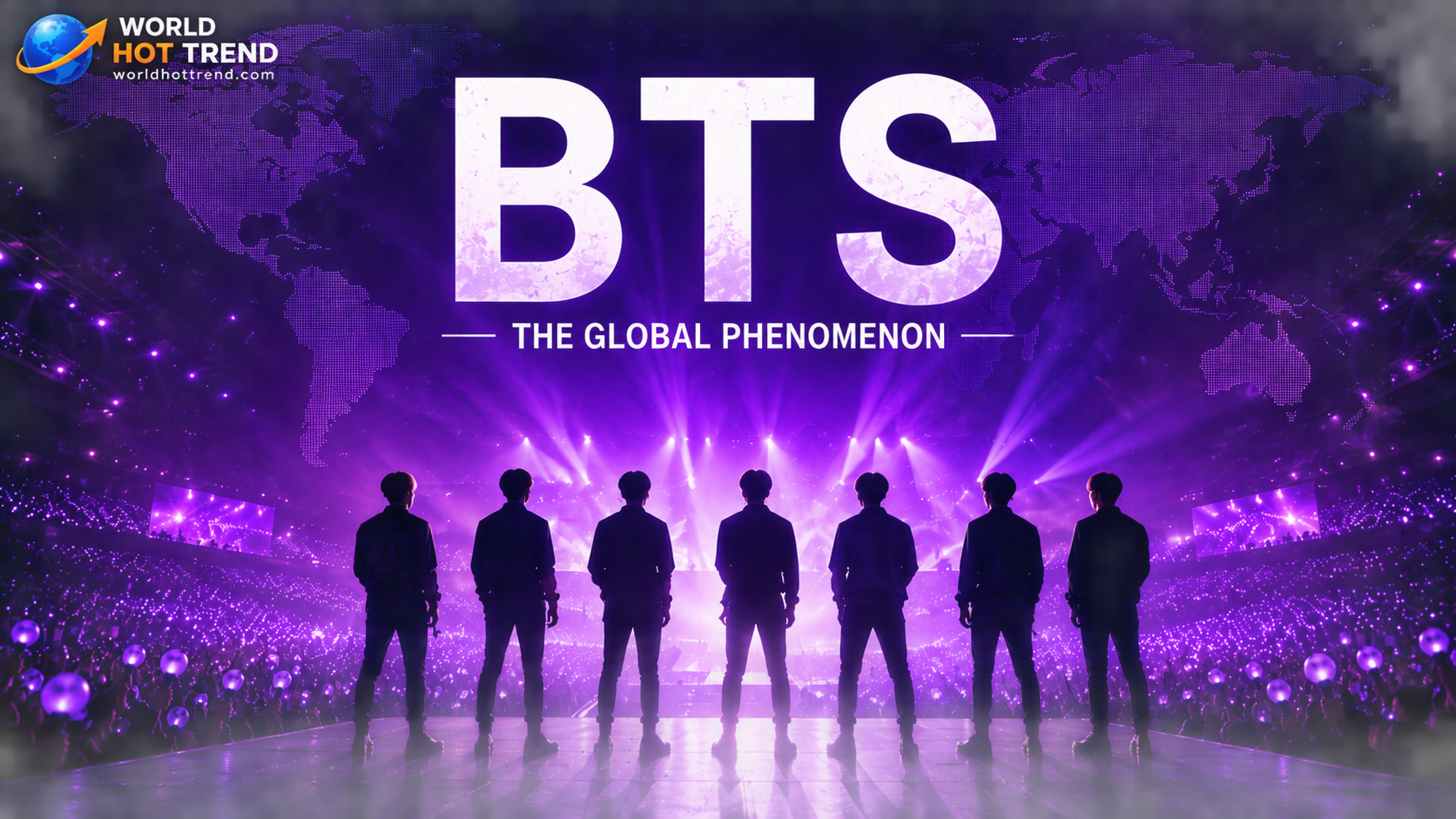
In September 2026, Los Angeles is turning into BTS territory.
Global superstars perform in Los Angeles all the time. But this time, the city itself has joined the celebration. Los Angeles officially designated September 1 through 8 as BTS Week as the group brings its ARIRANG World Tour to SoFi Stadium. City Hall is also being illuminated in red, the key color associated with the ARIRANG album. Mayor Karen Bass said the proclamation reflects a belief in the power of art and culture to connect communities and recognized BTS for its contributions to global culture, according to KBS World
BTS is scheduled for four Los Angeles shows on September 1, 2, 5 and 6, all beginning at 8 p.m. local time, according to SoFi Stadium
That raises a bigger question: Why would one of the world’s entertainment capitals dedicate an entire week to seven artists who began their career in South Korea? To understand why Los Angeles is celebrating BTS today, it helps to go back to how the group reached the world in the first place.
From Seven Young Korean Artists to Global Superstars
BTS debuted on June 13, 2013. Their rise was not an overnight leap from Korea to global stadiums. It was a series of breakthroughs built over years through music, performance, direct communication and an increasingly international fan network. By 2015, BTS had entered the Billboard 200. In 2016, Wings climbed to No. 26, then the highest position for a K-pop album at the time. In 2017, the group’s global breakthrough accelerated dramatically.
That year BTS became the first K-pop group to win Top Social Artist at the Billboard Music Awards. Love Yourself: Her reached No. 7 on the Billboard 200, while “DNA” became BTS’s first song to enter the Billboard Hot 100. The group then performed at the American Music Awards, putting seven Korean artists before one of American pop culture’s largest television audiences, according to Yonhap News Agency
In 2018, another barrier fell. Love Yourself: Tear became the first album by a Korean act to reach No. 1 on the Billboard 200, and “Fake Love” became the first K-pop group song to enter the Billboard Hot 100 Top 10. By 2020, “Dynamite” had taken BTS to No. 1 on the Hot 100, followed by more chart-topping singles and Grammy nominations. The progression matters because it shows that BTS did not simply become famous through one viral song. Their international audience expanded step by step until the group moved from K-pop success to mainstream global pop culture, according to Yonhap News Agency
The Music Came First: Stories Fans Could Recognize
Technology helped BTS travel farther, but technology alone does not explain why people stayed. Their songs repeatedly explored anxiety, failure, dreams, loneliness, pressure, youth and self-acceptance. Those themes gave international listeners an emotional entry point even when they did not speak Korean.
In a 2018 interview, BTS leader RM pushed back against the idea that social media alone explained the group’s success. He emphasized the quality of the music and performance, the sincerity of the group’s messages and frequent communication with fans. Suga similarly argued that reducing BTS’s rise to social-media skill missed the substance of what the group was trying to say through its music, according to Yonhap News Agency
The language was different. The emotions connected.
The Internet Changed the Way BTS Reached the World
For decades, becoming a truly global music star usually depended heavily on major record labels, radio networks and television in the United States and Europe. YouTube, social media and streaming changed that structure.
BTS and Big Hit were unusually active online from the group’s early years. Videos, behind-the-scenes material and direct messages allowed fans outside Korea to encounter the members without waiting for traditional Western media to introduce them. A video released in Seoul could be watched almost immediately in New York, London, São Paulo or Tokyo.
The importance of that digital relationship became impossible to ignore in 2017. BTS won Billboard’s Top Social Artist award against established global stars, a moment that demonstrated how large and organized its international audience had already become. Social media did not create the music, but it removed many of the old geographic barriers between BTS and potential listeners.
ARMY Turned Attention Into a Global Network
It is difficult to explain BTS’s global rise without ARMY. Fans became more than consumers of albums and concert tickets. Across languages and borders, they translated interviews and lyrics, shared performances, organized online activity and introduced BTS to new audiences.
That created a powerful feedback loop. BTS communicated directly with fans; fans translated and distributed that content; new listeners discovered the group; and a larger international community formed around the music. Academic research has since examined ARMY as a transnational social-media network, while studies of BTS’s success have highlighted the interaction among the group, Big Hit and the fandom, according to ScienceDirect study
By the time American television, awards shows and mainstream media were paying close attention, BTS had already built something unusually valuable: a global audience that did not depend entirely on traditional gatekeepers. The music created identification, digital platforms created access, and ARMY accelerated distribution. Together, those forces help explain how seven Korean artists crossed from a domestic debut into global pop culture.
If the Beatles Moved Stadiums, BTS Moves Cities
Once BTS became a global phenomenon, the scale of that fandom began to appear not only on charts but in the physical world. That naturally invites comparison with another group that transformed popular music fandom: The Beatles.
On August 15, 1965, the Beatles performed at New York’s Shea Stadium before a then-record crowd of about 55,600 people. Tickets cost between $4.50 and $5.65, and the show grossed about $304,000, with the Beatles receiving $150,000. MLB’s history of the event describes it as a watershed moment that established a new sense of scale for live popular music, according to MLB
It would be misleading to compare the Beatles and BTS simply by converting ticket revenue into today’s dollars. The two groups belong to different eras, with different touring industries, travel patterns, media systems and data collection methods. The more revealing comparison is how far the economic influence of fandom now extends beyond the stadium.
Sixty Years Later, the Concert Economy Extends Beyond the Venue
Today, fans cross cities and national borders for major concerts. They buy airline tickets, book hotels, eat at restaurants, shop and visit local attractions. That means the economic impact of a concert can spread far beyond ticket sales.
BTS’s 2026 concerts in Busan provide unusually clear evidence. South Korea’s Ministry of SMEs and Startups analyzed local business sales around the June 12 and 13 ARIRANG concerts. Across the four-week period spanning two weeks before and after the shows, Busan small-business sales increased 3.6% year over year. On the concert days, sales were 11.1% higher than a year earlier.
The strongest signal came from international visitors. Foreign spending in Busan increased 71.7%. Accommodation spending by foreign visitors rose 148.1%, restaurant spending rose 72.3%, and convenience-store spending rose 71.0%. The ministry said the analysis demonstrated with data the economic ripple effect that large-scale cultural content such as K-pop concerts can have on small businesses and neighborhood commercial districts, according to Ministry of SMEs and Startups
| Comparison | The Beatles | BTS |
|---|---|---|
| Representative era | 1960s | 2020s |
| Fandom phenomenon | Beatlemania | ARMY |
| Landmark example | 1965 Shea Stadium | ARIRANG World Tour |
| Common economic measures | Attendance and ticket revenue | Concerts, hotels, food, shopping and tourism |
| Media environment | TV, radio and newspapers | YouTube, social media and streaming |
| Measured impact | Primarily venue-centered historical data | Venue, local commerce and tourism data |
If the Beatles helped demonstrate the new scale of the stadium concert, BTS shows how a global fandom can extend the concert economy into the city around it.
How Is the World Evaluating BTS?
Instead of simply saying that BTS is influential, it is more useful to look at what host cities and public officials are actually doing and saying as the tour arrives.
Los Angeles: A Full BTS Week
Los Angeles designated September 1 through 8 as BTS Week. Mayor Karen Bass said the proclamation reflects the belief that art and culture can foster mutual understanding and unite communities, while recognizing BTS’s contribution to global culture and its special connection with Los Angeles. The Los Angeles City Council also described BTS as one of the most influential artists of this generation and highlighted the group’s role in opening doors for Korean and Asian artists in the global music industry, according to SBS News
Toronto: BTS Boulevard and BTS Weekend
Toronto went even further with a visible citywide welcome. The city temporarily designated a section of Yonge Street from North York Boulevard to Finch Avenue as BTS Boulevard, with the designation remaining through September 23. Toronto also proclaimed August 22 and 23 as BTS Weekend and illuminated the Toronto Sign in purple. The city noted that the two sold-out concerts were drawing thousands of fans from across Canada and around the world, according to City of Toronto
Why Do Cities Welcome BTS?
Viewed separately, BTS Week, BTS Boulevard and a spike in Busan business sales can look like unrelated news stories. Put them together and a pattern appears.
When fans travel, transportation moves. When they arrive, hotels fill. When they walk through a city, restaurants and shops gain customers. When tens of thousands gather for a concert, tourism and global media attention follow.
For a host city, a major global concert is no longer just a music event. It can also be tourism, consumer spending, cultural diplomacy and international city promotion at the same time.
From Seven Korean Artists to a Global Phenomenon
The path from BTS’s 2013 debut to BTS Week in Los Angeles did not come from a single breakthrough. Music and performance created the foundation. Personal themes helped listeners identify with the group. Digital platforms gave BTS direct access to people outside Korea. ARMY translated that connection across languages and borders. Billboard breakthroughs and major American stages then made an already-growing global audience impossible for the mainstream music industry to ignore.
That is why the story now extends beyond charts. Fans cross borders, stay in hotels, visit restaurants and shops, and turn concerts into citywide events. Cities proclaim BTS Week. Streets become BTS Boulevard. Public agencies can now measure the spending effects of fandom in real time.
BTS has become a vivid example of what happens when music, message, digital platforms and a global fan network converge.
Perhaps one of the most revealing measures of BTS’s influence is no longer only a chart position or album sales figure. It is how many people, businesses and cities begin to move when BTS arrives.
FAQ
Is BTS Week in Los Angeles official?
Yes. Los Angeles designated September 1 through 8, 2026 as BTS Week in connection with the group’s ARIRANG World Tour concerts, according to KBS World
When are the BTS concerts in Los Angeles?
SoFi Stadium lists four shows on September 1, 2, 5 and 6, 2026, with each event scheduled to begin at 8 p.m. local time, according to SoFi Stadium
Is there evidence that BTS concerts affect local economies?
Yes. The South Korean government’s analysis of the 2026 Busan concerts found a 3.6% year-over-year increase in small-business sales across the study period and a 71.7% increase in foreign spending. Foreign accommodation spending increased 148.1%, according to Ministry of SMEs and Startups
Can the economic impact of BTS and the Beatles be directly compared?
Not on an equal basis. Their peak touring eras are separated by roughly six decades, and modern data can track hotel, restaurant, retail and foreign visitor spending in ways that were not available in the 1960s. The comparison in this article focuses on how the scope of measurable fandom economics has changed rather than claiming one group generated more economic value.
Why compare BTS with the Beatles?
The comparison is not about musical similarity or declaring a winner. Beatlemania became a defining example of 20th-century mass music fandom, while BTS and ARMY demonstrate how global fandom operates in a digital, connected and highly mobile era.
Is BTS Boulevard in Toronto real?
Yes, but it is an honorary temporary designation rather than a permanent street renaming. Toronto designated part of Yonge Street as BTS Boulevard and proclaimed August 22 and 23 BTS Weekend, according to City of Toronto
Why call BTS a global phenomenon?
Because the group’s influence extends beyond music sales and concert attendance. BTS connects music, digital fandom, international travel, tourism, local spending and cultural visibility across multiple countries and cities.
Next: The Los Angeles Concert Reviews
This article looked at how BTS became a global phenomenon and how that influence now reaches cities and local economies. The next story will return to the stage itself.
Next: BTS in Los Angeles — What Did the Critics Say?
We will examine reviews from U.S. and international media after the Los Angeles performances, including assessments of the show, the seven members’ performances, the atmosphere created by ARMY and what critics thought of BTS on stage. Positive and critical assessments will be linked directly to the original reviews.