
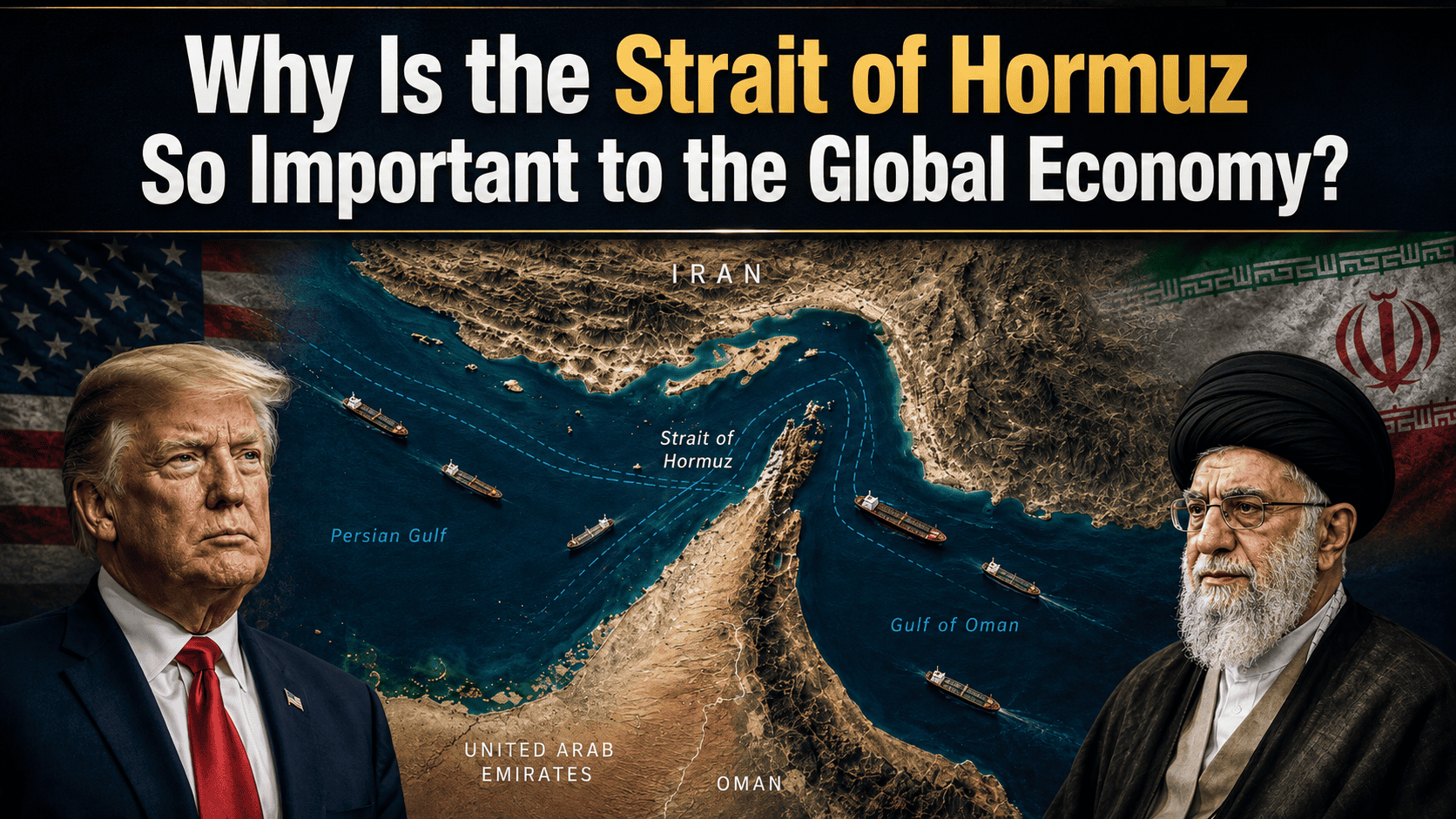
Part 1 of the U.S.–Iran War series examines how decades of political conflict, revolution, nuclear tensions, and economic sanctions eventually led to the 2026 war.
In 2026, the conflict between the United States and Iran has moved far beyond diplomatic tension, sanctions, and proxy warfare.
But the two countries were not always enemies.
Only a few decades ago, Iran was one of Washington’s most important partners in the Middle East. U.S. government records from the Nixon era describe Iran under Shah Mohammad Reza Pahlavi as one of America’s strongest friends in the Persian Gulf.
So how did two countries that once worked closely together become military adversaries?
To understand the conflict today, we need to go back more than 70 years.
The story involves a coup, a revolution, a hostage crisis, an eight-year regional war, a civilian airliner tragedy, nuclear negotiations, sanctions, assassinations, and eventually direct military conflict.
1. Iran Was Once a Major U.S. Ally
During the Cold War, Iran was strategically important to the United States.
The country bordered the Soviet Union, possessed enormous oil and natural gas resources, and occupied a critical position along the Persian Gulf.
Washington saw Iran as an important barrier against Soviet influence in the Middle East.
Shah Mohammad Reza Pahlavi also maintained close political and military ties with the United States.
Declassified U.S. State Department records show just how close that relationship became.
Between 1969 and 1972, the Nixon administration regarded Iran as its strongest friend in the Persian Gulf. During President Richard Nixon’s 1972 visit to Tehran, the United States agreed to make virtually all advanced American weapons available to the Shah, with nuclear weapons being the major exception.
The relationship benefited both sides.
The United States gained a powerful regional partner, while Iran gained access to advanced American weapons, military training, and political support.
But the roots of future hostility had already been planted.
2. The 1953 Coup — A Turning Point in Iranian Distrust of the United States
One of the most important events in modern U.S.-Iran relations happened in 1953.
Iranian Prime Minister Mohammad Mossadegh had moved to nationalize the country’s oil industry, which had long been dominated by British interests.
The decision created a serious confrontation with Britain.
The United States then became involved in efforts to remove Mossadegh from power.
For decades, the full extent of American involvement was debated publicly.
Today, however, declassified U.S. government records provide unusually direct evidence.
A CIA memorandum dated March 8, 1954 described a campaign whose stated objective was to bring down Mossadegh’s government and replace it with a pro-Western government under the Shah.
The CIA operation was known as TPAJAX.
The document states that CIA representatives applied pressure to strengthen the Shah, coordinated political groups opposed to Mossadegh, supported propaganda operations, and helped create the conditions that led to his removal.
Mossadegh was successfully ousted on August 19, 1953.
Even more revealing is a later entry from President Dwight D. Eisenhower’s diary.
Eisenhower acknowledged that the United States had helped restore the Shah to power and remove Mossadegh, while also noting that the activities had been covert.
For many Iranians, the 1953 coup became a lasting symbol of foreign interference in their country’s politics.
It remains one of the most important historical reasons for Iranian distrust of the United States.
3. Washington Continued to Support the Shah
After Mossadegh was removed, the Shah’s position became considerably stronger.
The United States expanded its military, intelligence, and political relationship with Iran.
Iran underwent rapid modernization.
Industry grew. Education expanded. Infrastructure improved. Women gained greater participation in public life through reforms promoted by the monarchy.
But modernization came with another side.
Political power became increasingly concentrated around the Shah, while political opponents faced repression.
Economic growth also did not benefit every part of Iranian society equally.
Religious leaders, students, intellectuals, political activists, and other groups increasingly criticized the monarchy.
Many also viewed the Shah as too dependent on Washington.
U.S. officials themselves were aware of growing domestic dissatisfaction.
Nixon-era State Department records noted criticism of the Shah’s government as authoritarian and documented increasing student protests and political violence, although Washington did not believe at the time that the monarchy faced an immediate threat.
That assessment proved wrong.
4. The 1979 Iranian Revolution Changed Everything
In 1979, Iran experienced a revolution that completely transformed the country’s political system and its relationship with the United States.
The Shah left Iran.
Ayatollah Ruhollah Khomeini returned from exile.
The monarchy collapsed and the Islamic Republic of Iran was established.
A country that had been one of Washington’s closest regional partners adopted a sharply different foreign policy.
The new Iranian leadership viewed the United States through the history of the 1953 coup and decades of American support for the Shah.
For Washington, meanwhile, the revolution meant the loss of a strategically important ally in the Middle East.
But the event that truly shattered the relationship came later that same year.
5. The U.S. Embassy Hostage Crisis
On November 4, 1979, Iranian students seized the U.S. Embassy in Tehran.
More than 50 Americans were taken hostage.
They remained in captivity for 444 days.
The State Department record documents the Carter-era Iran crisis.
Images of blindfolded American hostages were repeatedly broadcast in the United States and deeply influenced American public perceptions of Iran.
In April 1980, the United States formally broke diplomatic relations with Iran.
Normal diplomatic relations have never been fully restored.
This created two powerful historical memories on opposite sides.
For many Iranians, 1953 represented American interference in Iranian sovereignty.
For many Americans, 1979 represented Iran’s seizure of an American embassy and the detention of U.S. diplomats.
Both memories continue to shape the relationship today.
6. The Iran-Iraq War Deepened Iran’s Security Fears
Iran had little time to recover from the revolution.
On September 22, 1980, Saddam Hussein’s Iraq invaded Iran.
The invasion began the Iran-Iraq War, one of the longest and bloodiest conventional wars of the late twentieth century.
The fighting continued for almost eight years.
Cities were attacked, oil infrastructure became a target, and chemical weapons were used during the conflict.
For Iran, the war became a formative national trauma.
It also strongly influenced the way Iranian leaders later thought about national defense.
Iran had learned that it could not always rely on conventional military superiority or outside allies.
Over time, Tehran placed greater emphasis on missiles, asymmetric warfare, regional partners, and strategic depth beyond its borders.
The war also brought the United States and Iran into increasingly dangerous contact in the Persian Gulf.
By the late 1980s, attacks on oil tankers and maritime shipping had turned the Gulf into another battlefield, according to U.S. Department of State
7. The 1988 Iran Air Flight 655 Tragedy
Another event remains deeply embedded in Iranian memory.
On July 3, 1988, the U.S. Navy guided-missile cruiser USS Vincennes shot down Iran Air Flight 655 over the Persian Gulf.
The aircraft was an Airbus A300 civilian passenger jet flying from Bandar Abbas to Dubai.
All 290 people aboard were killed, including 66 children.
According to the U.S. Naval History and Heritage Command, the Vincennes crew mistakenly believed the civilian aircraft was an attacking Iranian F-14 fighter.
The Navy’s own historical account describes a series of human errors that contributed to the misidentification.
The United States maintained that the destruction of the aircraft was not intentional.
For Iran, however, the incident became another powerful symbol of the dangers posed by the U.S. military presence in the region.
The tragedy occurred during the final phase of the Iran-Iraq War and further deepened distrust between the two countries, according to Naval History and Heritage Command
8. Iran’s Nuclear Program Became the New Center of the Conflict
By the 1990s and 2000s, the nuclear issue had become one of the most important sources of tension.
Iran has consistently maintained that its nuclear program is intended for peaceful purposes such as electricity generation, research, and civilian applications.
The United States, Israel, and several other countries have been concerned that Iran could develop the technological capability needed to build a nuclear weapon.
This distinction is important.
A country can possess uranium-enrichment technology without necessarily having a nuclear bomb.
But advanced enrichment capability can shorten the time required to produce weapons-grade nuclear material if a government decides to pursue that path.
That possibility became the center of years of sanctions, inspections, diplomacy, and negotiations.
Eventually, diplomacy produced a major agreement.
9. The 2015 Iran Nuclear Deal
In July 2015, Iran reached an agreement with the United States, United Kingdom, France, Germany, Russia, China, and the European Union.
The agreement became known as the Joint Comprehensive Plan of Action, or JCPOA.
Its basic structure was relatively straightforward.
Iran accepted restrictions and international monitoring of parts of its nuclear program.
In exchange, nuclear-related economic sanctions were to be lifted or relaxed.
On July 20, 2015, the United Nations Security Council unanimously adopted Resolution 2231 endorsing the agreement.
The International Atomic Energy Agency, or IAEA, was given a central role in verifying and monitoring Iran’s nuclear-related commitments.
For a brief period, the agreement created the possibility that one of the most dangerous disputes between Iran and the West could be managed through diplomacy.
But the arrangement did not survive unchanged, according to United Nations Security Council
10. The United States Left the Nuclear Deal in 2018
On May 8, 2018, President Donald Trump announced that the United States would stop participating in the JCPOA.
The decision is documented in an official presidential memorandum preserved in the White House archives.
The memorandum directed U.S. officials to end American participation in the agreement and begin restoring sanctions that had been lifted or waived under the nuclear deal.
The Trump administration argued that the JCPOA did not adequately address long-term nuclear risks, Iran’s ballistic missile program, and Tehran’s regional activities.
Iran and the other parties to the agreement criticized the American withdrawal.
From Tehran’s perspective, the United States had abandoned an internationally negotiated agreement while Iran was still subject to international nuclear monitoring.
The United States then introduced a policy commonly described as maximum pressure, using extensive economic sanctions to pressure Tehran.
Relations deteriorated rapidly, according to White House Archive
11. The Killing of Qasem Soleimani in 2020
The risk of direct war increased dramatically in January 2020.
The United States killed Major General Qasem Soleimani, commander of Iran’s Islamic Revolutionary Guard Corps-Quds Force, in a strike near Baghdad International Airport.
Soleimani was one of the most powerful military figures in Iran and played a major role in Tehran’s regional strategy.
The U.S. Department of Defense said the operation was ordered by President Trump and described it as defensive action intended to protect American personnel.
Iran promised retaliation.
Days later, Iran launched ballistic missiles at Iraqi bases housing American and coalition troops.
The Pentagon later confirmed that Iran had launched 16 ballistic missiles into Iraq, with missiles striking locations including Al Asad Air Base.
The confrontation brought the two countries dangerously close to a much larger war.
But once again, both sides stopped short of sustained direct conflict.
12. 2025: Israel and Iran Fight a 12-Day War
The conflict entered an entirely new phase in June 2025.
On June 13, Israel launched major strikes against Iran.
Targets included nuclear facilities, missile infrastructure, military commanders, and other strategic sites.
Iran retaliated with ballistic missiles and drones against Israel.
Reuters reported on the direct Israel-Iran confrontation rather than another conflict fought primarily through proxies.
Then the United States entered the military campaign directly.
On June 22, U.S. forces attacked Iran’s major nuclear sites at Fordow, Natanz, and Isfahan.
The IAEA confirmed that nuclear facilities had been affected by the attacks and continued assessing the damage using satellite imagery and other information.
A ceasefire brought the fighting to a halt after roughly 12 days.
But the fundamental issues were not resolved.
Iran’s nuclear program remained a point of dispute.
Iran’s missile program remained intact as a major security concern.
U.S. sanctions remained central to the relationship.
And perhaps most importantly, a precedent had now been established: the United States and Iran had crossed into direct military attacks connected to Iran’s nuclear program, according to IAEA
13. February 28, 2026: The Conflict Expands Again
The pause did not last.
After renewed nuclear diplomacy and months of threats and military preparations, the United States and Israel launched major new strikes against Iran on February 28, 2026.
Reuters reported that the strikes targeted Iranian leaders and strategic facilities.
Iran responded with missile and drone attacks against Israel and targets connected to the United States and its regional allies.
The fighting quickly affected a much wider part of the Middle East.
Flights were cancelled.
Gulf countries strengthened their defenses.
Energy markets became increasingly nervous about the possibility that the conflict could disrupt oil exports from the Persian Gulf.
Unlike earlier confrontations that ended after a few days, the 2026 conflict continued.
As of August 22, 2026, Reuters reported that military pressure, economic sanctions, threats of retaliation, and unresolved diplomacy were all continuing at the same time.
The war has also disrupted oil traffic through the Strait of Hormuz, reinforcing the link between this regional conflict and the global economy.
14. So What Are the United States and Iran Actually Fighting About?
After more than 70 years of history, it becomes clear that there is no single cause.
Historical Distrust
Iran remembers the 1953 coup and decades of U.S. support for the Shah.
The United States remembers the 1979 embassy seizure and the 444-day hostage crisis.
Iran also remembers the 1988 destruction of Iran Air Flight 655.
Each country has its own historical narrative explaining why the other side cannot easily be trusted.
The Nuclear Dispute
The United States has sought to prevent Iran from developing a nuclear weapon.
Iran argues that it has the right to pursue peaceful nuclear technology and insists that its program is not intended to produce nuclear weapons.
The disagreement is not only about whether Iran possesses a bomb today.
It is also about how much nuclear capability Iran should be allowed to maintain and how that capability can be verified.
Regional Power
Iran and the United States also support very different security structures in the Middle East.
Washington has close security relationships with Israel and several Gulf Arab states.
Iran has built relationships with armed and political groups across countries including Lebanon, Iraq, Yemen, and elsewhere in the region.
The United States often describes this network as a source of regional instability.
Iran describes many of these relationships as part of its defense against U.S. and Israeli pressure.
Economic Sanctions
For decades, sanctions have been one of Washington’s most powerful tools against Tehran.
The United States has used financial, energy, banking, and trade restrictions to pressure Iran over its nuclear program, missiles, regional activities, and other policies.
Iran considers many of these sanctions a form of economic warfare.
That disagreement has become even more important during the 2026 conflict, as Washington has continued to use economic pressure alongside military power.
Mutual Threat Perception
Perhaps the most important problem is that each side often views the other’s defensive strategy as offensive.
The United States sees Iran’s ballistic missiles, drones, nuclear capabilities, and regional armed partners as threats.
Iran sees American military bases around the Persian Gulf, U.S. sanctions, American support for Israel, and the history of U.S. intervention as threats.
That creates a dangerous cycle.
One side takes action to increase its security.
The other side interprets that action as preparation for aggression.
It responds.
And the cycle begins again.
A Timeline of the U.S.-Iran Conflict
| Year | Major Event | Why It Matters |
|---|---|---|
| 1953 | Mossadegh is removed from power | U.S. covert involvement becomes a lasting source of Iranian distrust |
| 1979 | Iranian Revolution | The pro-U.S. monarchy collapses and the Islamic Republic is established |
| 1979–1981 | U.S. Embassy hostage crisis | More than 50 Americans are held for 444 days |
| 1980–1988 | Iran-Iraq War | The war transforms Iran’s security strategy and militarizes the Persian Gulf |
| 1988 | Iran Air Flight 655 shot down | 290 civilians are killed by a U.S. Navy missile |
| 2015 | JCPOA nuclear agreement | Diplomacy temporarily reduces the nuclear confrontation |
| 2018 | U.S. leaves JCPOA | Sanctions return and relations deteriorate |
| 2020 | Qasem Soleimani killed | Iran and the United States move close to direct war |
| 2025 | Israel-Iran 12-Day War | The U.S. directly attacks Iranian nuclear facilities |
| 2026 | New U.S.-Israeli strikes on Iran | The confrontation expands into a prolonged direct military conflict |
The 2026 War Did Not Begin Overnight
If we look only at the military strikes of 2026, it may appear that the conflict suddenly erupted because of nuclear negotiations or a recent attack.
History tells a much more complicated story.
The path looks more like this:
1953 coup and Mossadegh’s removal
→ U.S. partnership with the Shah
→ 1979 Iranian Revolution
→ U.S. Embassy hostage crisis
→ Iran-Iraq War
→ Iran Air Flight 655
→ Iran’s nuclear dispute
→ 2015 nuclear agreement
→ 2018 U.S. withdrawal
→ 2020 killing of Qasem Soleimani
→ 2025 Israel-Iran war and U.S. nuclear-site strikes
→ prolonged U.S.-Iran conflict in 2026
The nuclear dispute is a major part of today’s conflict.
But it sits on top of something much older.
More than seven decades of political intervention, revolution, war, sanctions, military confrontation, competing regional interests, and mutual distrust have shaped the relationship.
That is why solving the U.S.-Iran conflict is far more difficult than reaching an agreement on a single nuclear facility or weapons system.
And there is one location that repeatedly appears throughout this history.
The Persian Gulf and the Strait of Hormuz.
It mattered during the Iran-Iraq War.
It mattered during the tanker conflict of the 1980s.
And in 2026, it has once again become one of the most important pressure points in the global economy.
So why does the entire world care so much about one narrow waterway?
That is the question we will explore next:
Why Is the Strait of Hormuz So Important to the Global Economy?
A Note on Historical Sources
Declassified U.S. government documents are especially valuable because they provide primary evidence of American decision-making at the time.
However, they represent records produced by U.S. institutions and do not by themselves represent every Iranian, British, regional, or international perspective.
For that reason, major nuclear and recent-war developments in this article are also supported by United Nations, IAEA, and international news sources.
Understanding the U.S.-Iran conflict requires examining not only what happened, but also how the same events have been remembered differently by each side.
Continue reading → U.S.–Iran War Part 2